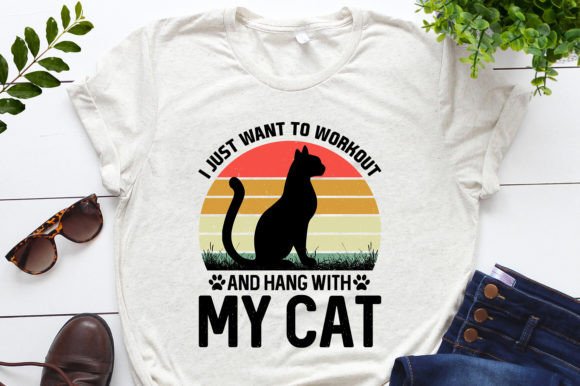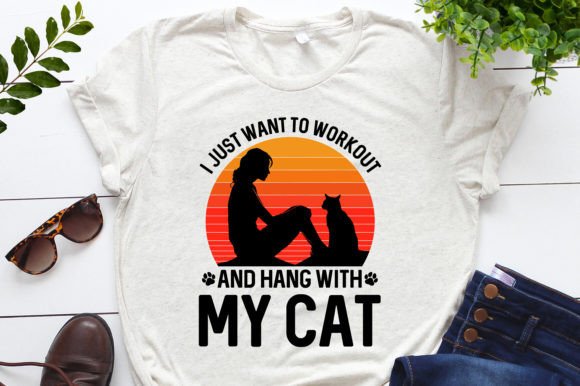
Workout with My Cat T-Shirt Design
As a designer who’s stitched over 200 custom embroidery projects—from boutique baby onesies to Etsy best-selling tote bags—I opened Workout with My Cat T-Shirt Design expecting charm, but what I found was something more useful: a design that balances whimsy and wearability without sacrificing stitch integrity. Let me walk you through how it holds up—not on screen, but under needle.
A First Stitch Is Always a Conversation
The moment I loaded the PNG into my digitizing software, I noticed how cleanly the outlines held shape: rounded curves on the cat’s tail, confident negative space around the “Workout” lettering, and just enough detail in the paw print icon to read clearly at 3.5 inches wide. It doesn’t scream “cute overload”—it leans into relaxed confidence. That matters when you’re embroidering a yoga studio’s staff aprons or gifting a personalized sweatshirt to a friend who actually does squats *with* her cat (yes, she exists).
I tested Workout with My Cat T-Shirt Design on a medium-weight cotton twill tote—stabilized with tear-away + light cutaway—and ran it at 7.5” hoop size. The layout translated beautifully: the cat’s head sat comfortably above the pocket seam, the text stayed legible without tight kerning stress, and the overall footprint left room for breathability on fabric. No puckering. No thread nesting in the curved ear details. That’s rare in playful graphics meant for broad appeal.
Where This Design Earns Its Keep
Workout with My Cat T-Shirt Design isn’t just for t-shirts—even though its name says so. In real-world use, it shines brightest on:
- Tote bag designs — The balanced width-to-height ratio fits standard side panels without distortion.
- Sweatshirt embroidery — The bold silhouette reads well on textured fleece; no tiny fill-stitch traps.
- Embroidered patches — Clean edges mean crisp merrowed borders and minimal fraying risk.
- Baby embroidery — Gentle proportions avoid overwhelming small onesie fronts; works well scaled to 2.75”.
- Holiday embroidery — Paired with a subtle metallic gold thread, it adds warmth to Christmas market tea towels or stocking stuffers.
- Commercial embroidery — The vector files (EPS and SVG) allow clean resizing for shop signage, packaging labels, or digital embroidery file bundles.
It also performs quietly well in print-on-demand prep: that 4500×5400px PNG at 300 DPI gives room to crop for different garment placements—left chest, back yoke, sleeve cuff—without pixelation. And the black transparent PNG? A lifesaver when mocking up dark fabric options for your Etsy listing or wholesale catalog.
Where to Pause Before Pressing Start
This isn’t a one-size-fits-all embroidery file—and that’s honest, not limiting. Here’s where I’d slow down:
- Small hoop sizes (under 4”) — The full composition loses clarity below ~3”. Consider cropping to just the cat + paw icon for caps or baby caps.
- Stretchy fabric (like performance tees) — Use cutaway stabilizer + basting stitches. The letterforms have moderate stroke weight—fine on stable knits, but test first on jersey blends.
- Textured or napped fabrics (terry cloth, heavy fleece) — Reduce fill stitch density slightly if digitizing your own version; the original art has generous spacing between elements, which helps.
- Dark fabric backgrounds — The black transparent PNG is ideal here, but always check thread color contrast. Light gray or heather thread can mute the playfulness—opt for charcoal or navy instead.
- Curved surfaces (like structured caps) — Avoid placing the full design across the front panel curve. Instead, center the cat alone—or use the SVG to isolate and reposition key elements.
What It Says About Your Handmade Product
Customers don’t buy “a cat graphic.” They buy tone, intention, and trust. Workout with My Cat T-Shirt Design lands as lighthearted but grounded—not ironic, not cloying. When stitched onto a linen pillow cover for a new mom who’s also training for her first 5K, it feels personal, not mass-produced. On a small-batch apron for a coffee roastery’s team, it signals culture without shouting.
That subtlety builds buyer engagement. People pause. Smile. Ask, “Is that *your* cat?” That’s the quiet power of a design that respects both craft and context. It elevates your handmade product from “nice” to “I want to know the story behind this.”
Practical Embroidery Designer Notes
Before stitching your first client order or uploading to your Etsy shop:
- Test Workout with My Cat T-Shirt Design on scrap fabric matching your final product’s weight and stretch.
- Check thread color contrast—especially for the word “Workout”—against both light and dark backgrounds.
- Review stitch density in the cat’s fur texture area; if digitizing from the vector, avoid overfilling those soft curves.
- Confirm hoop size compatibility—this design scales well, but verify before hooping expensive garments.
- Inspect small details (paw pad lines, whisker hints) at actual stitch-out size—what looks sharp on screen may soften in thread.
- Try a black-and-white mockup to assess value contrast—critical for gift buyers scanning listings quickly.
- Use proper stabilizer: medium cutaway for knits, tear-away for stable wovens, and fusible + tear-away for lightweight linens.
- Verify licensing terms before selling finished items or bundling the digital embroidery file—this design includes EPS/SVG, so commercial use may require review.
If you’re curating design assets for a craft business, this one earns shelf space—not because it’s trendy, but because it’s reliable. It fits neatly into holiday embroidery collections, baby embroidery bundles, and even minimalist gym-branded merchandise—without needing heavy editing.
In short: Workout with My Cat T-Shirt Design is the kind of Graphics asset that makes your workflow smoother, your clients smile wider, and your small shop product feel thoughtfully made—not just assembled. It’s ready when you are.