Nope Funny Lazy Cat Attitude Humor
First Impression: A Sigh, a Smile, and Instant Recognition
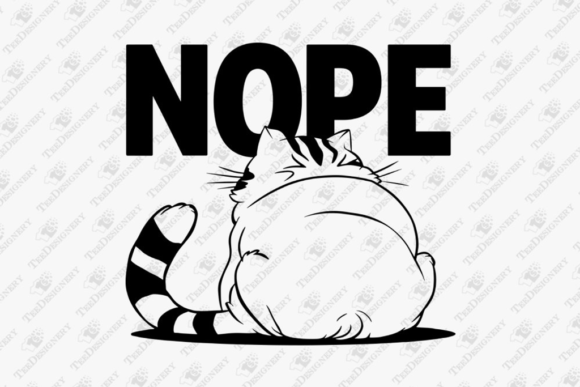
When I opened the Nope Funny Lazy Cat Attitude Humor file and previewed it on screen, I didn’t just see a graphic—I felt its energy. It’s got that perfectly dry, unbothered feline vibe: slumped posture, half-lidded eyes, one paw lazily raised like a tiny white flag of surrender. The line work is clean but expressive—not overly detailed, not cartoonishly simplified. It lands right where it should for embroidery: bold enough to read at a glance, simple enough to stitch cleanly across fabric types. This isn’t a design shouting for attention; it’s leaning back on the couch, sipping imaginary tea, and somehow still owning the room.
Real-Life Test Run: Embroidering a Linen Tote for My Local Café Pop-Up
Last week, I used Nope Funny Lazy Cat Attitude Humor on a medium-weight natural linen tote—intended as staff gifts for a neighborhood café’s “Slow Coffee Week.” I chose a 4” hoop, medium tear-away stabilizer, and matte cotton thread in charcoal gray on off-white linen. The result? Crisp, confident, and quietly charming. The cat’s outline held beautifully with satin stitch edges, and the minimal internal detail (just two subtle eye highlights and a soft curve for the mouth) translated without bleeding or fuzzing. Customers kept stopping to point and laugh—not because it was loud, but because it felt *true*. That’s the quiet power of this design: it builds connection through shared recognition, not novelty.
Where It Shines—and Where It Needs Thoughtful Handling
Nope Funny Lazy Cat Attitude Humor works especially well on custom apparel, sweatshirts, tote bags, aprons, and pillow covers—anything where relaxed personality matters more than precision polish. Its balanced proportions make it forgiving on curved surfaces like caps (though I’d avoid the very front crown curve unless using a cap frame). It holds up nicely on baby embroidery too—think organic cotton onesies—because the shape reads clearly even at 3.5”, and there’s no tiny text or fragile linework to vanish in stitching.
That said, proceed with care on dark fabric: the design relies on silhouette contrast, so test thread color against your base fabric early. On stretchy knits or thin tees, use cut-away + topping stabilizer to prevent puckering around the cat’s rounded body. Avoid cramming it into hoops smaller than 3.5”—the lazy paw lift loses definition below that size. And while it’s labeled under T-Shirt Designs, remember: as a Graphics file set, it’s optimized for cutting machines (Cricut, Silhouette Cameo), not machine embroidery. If you’re planning actual embroidery, you’ll need to digitize it—or confirm whether a compatible embroidery file (.dst, .pes, etc.) is included (the product description lists only SVG, PNG, DXF).
Stitching Clarity & Customer Trust Go Hand-in-Hand
A design like Nope Funny Lazy Cat Attitude Humor doesn’t just decorate—it communicates tone before a word is spoken. When stitched cleanly, it tells customers: “This maker understands craft *and* character.” That builds trust, especially for Etsy sellers and small shop owners offering personalized gifts or boutique merchandise. But if the stitch density is too high for the fabric, or the stabilizer fails, that same design reads as rushed—not lazy, just careless. So always run a test on scrap fabric first. Check how the curves hold on your chosen thread weight. Compare black thread on cream versus white thread on navy in a printable mockup. See how it looks after one wash cycle. That extra step turns a fun graphic into a reliable design asset.
Smart Use Cases for Creative Entrepreneurs
For craft business owners, this design fits seamlessly into holiday embroidery (think “Naughty List? Nope.” tea towels), nursery decor (“Nap Time Is Non-Negotiable” pillows), or wedding gifts (“Our Wedding Planner Has Left the Chat” embroidered napkins). As a digital embroidery file alternative, it’s ideal for creating iron-on patches—just convert the SVG to a vector-ready format for your cutter, then fuse onto twill or denim. For handmade product lines, pair it with neutral tones and minimalist packaging to let the humor breathe. And for Etsy sellers listing digital products? Make sure your license terms explicitly allow commercial use—especially if buyers plan to sell finished embroidered items. The product description doesn’t state licensing details, so verify before listing or reselling.
Design Notes Every Embroidery Designer Should Keep Handy
- Test first: Always stitch Nope Funny Lazy Cat Attitude Humor on scrap fabric matching your final project’s weight and texture.
- Check contrast: Preview in black-and-white mockups—does the shape pop on both light and dark backgrounds?
- Confirm hoop fit: Measure the design’s widest point. Does it comfortably clear your hoop’s inner edge by at least ¼”?
- Inspect small details: Zoom in on the paw and eyes—will those shapes digitize cleanly at your intended size?
- Stabilizer match matters: Linen? Medium tear-away. Stretchy knit? Cut-away + topping. Felt or fleece? Light cut-away only.
- Licensing check: Since only SVG, PNG, and DXF are listed, confirm whether commercial embroidery rights are granted before selling finished embroidered goods.
Final Thought: Charm That Stitches Well
Nope Funny Lazy Cat Attitude Humor isn’t flashy—but it’s memorable. It’s not intricate—but it’s intentional. In a market flooded with overdesigned graphics, this one earns its place by respecting both the craft and the customer’s sense of humor. Used thoughtfully—with attention to fabric, stabilizer, scale, and context—it becomes more than a cat saying “nope.” It becomes a signature, a conversation starter, a little piece of handmade wit that people choose to carry, wear, and gift. And honestly? That’s the kind of design that keeps craft businesses coming back for more.